
It’s frustrating when your friends, family, or coworkers won’t change. From your perspective, you know they need to change. Therefore, their unwillingness or inability to do things differently annoys, frustrates, angers, and upsets you.
You keep telling them they need to change… and demanding that they change. You feel certain everything will be better if they do. Certainly, you’ll be happier.
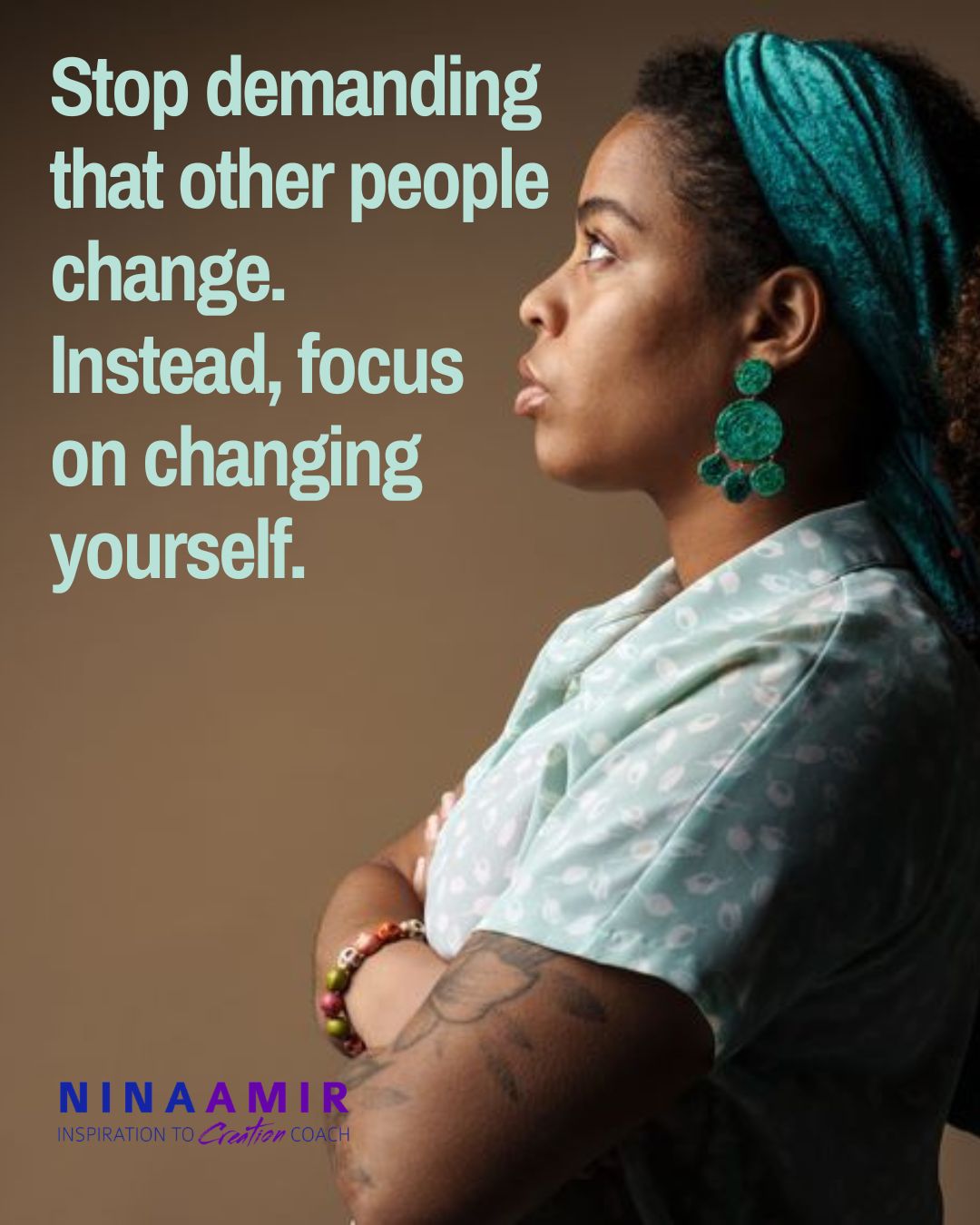
In fact, you need to stop demanding that people change.
When other people frustrate you because of their habits, behaviors, or mindset, it is not your place to demand they change. And your demands won’t change anything, especially not them.
You can’t make people change; they have to want to change. They have to feel the need to be different or do things differently. Until they feel the necessity or desire to change, they will remain the same.
And if you continue demanding change, you will make yourself more miserable over time. I know you don’t want that, so consider the following three ways to look at the person or relationship differently.
It’s Not About Them, It’s About You.
Here’s the truth of the matter: when you believe someone needs to change, that’s just your perspective. Thus, your feelings and interpretations are not about them at all. They are about you.
The people you want to change aren’t concerned about their behavior, mindset, or habits. If they were, they would change. You are the only one concerned. Even if other people join you in your judgment, that doesn’t mean that the person being scrutinized has to change or needs to change.
What you see as something someone needs to change says more about you than them. It demonstrates a personal preference that they’re not meeting.
More importantly, when somebody annoys, irritates, frustrates, or angers you, those emotions indicate that there’s something you see in them that you don’t like or consider missing in yourself. The person you want to change is mirroring to you something you need or want to change—even if you haven’t acknowledged that fact consciously.
Your annoyance or discomfort is yours. It’s not theirs. Own that; take responsibility for the fact that you just don’t like something about the other person. And your dislike or judgment is about you, not about them.
Release this need to make them change. Instead, follow Mel Robbins’ advice: Let them.
Let them be who they are rather than judge them. Let them, instead of demanding that someone change to make you feel better.
When You Change, They Change.
Your job is not to make other people change. Your job is to change yourself.
And here’s the magic in that act: When you change, the people around you change.
Change, and you’ll see people differently. So, even if they haven’t really changed at all, you will perceive that they are different.
For example, if you decide not to get upset by your son leaving dishes in the kitchen sink, you will no longer look at your son and think negative thoughts about his behavior. As you change, you see your circumstances and others’ behavior differently.
However, when we change on the inside, we create change on the outside. Thus, often the people around us change after we have experienced transformation. Our change has a ripple effect, causing them to change, too.
And consider this: More often than not, when you demand that somebody else change, they are mirroring you. In other words, what you want them to do differently provides a reflection of the behavior you need to change.
I spent many years complaining that my husband wouldn’t change. Then I realized I wasn’t changing either. I kept complaining, complaining, complaining instead of doing something different, instead of being someone different. It wasn’t until I stopped complaining—until I changed—that my relationship with my husband improved. And then eventually he changed, too.
Accept, Don’t Tolerate.
One reason you want people to change is that you are tolerating them or their behaviors, habits, or mindsets. As long as you tolerate, you’ll feel the need to demand that people change.
Tolerating leads to anger, resentment, upset, frustration, judgment, and other equally unpleasant emotions. And it leads to constant demands that someone change, so you stop feeling bad.
When you decide to accept someone the way they are—habits, mindsets, behaviors, and all—you’ll stop feeling the need to ask them to change. There won’t be a reason to demand that they change because you accept them for who and how they are.
Accepting someone as they are changes how you feel about that person. You won’t feel the need to demand that they change. After all, you accept them as they are.
Demand Change in Yourself
As long as you demand that other people change—or feel the need to do so, you will be unhappy. As soon as you take responsibility for yourself and your own need to change, everything changes.
Demand personal change in yourself. Engage in your own personal growth.
If you do that, your relationship with other people will improve. They will feel better about you because they won’t feel judged or not good enough as they are. And you will feel better about them because you perceive them differently…and you are different.
Stop demanding that others change. Remember, whatever you think they need to change is not about them; it’s about you.
Take it upon yourself to change, and other people will change—or your perception of them will be altered.
Accept people the way they are, rather than tolerate them. If you can’t do that, consider that it might be time to end the relationship.
You want people to be different. But no one likes to be told they need to change—especially to make someone else accept or like them. Instead, be someone different. Then, watch how different your relationships become and how much better you feel.
Do you demand that people change? Tell me in a comment below. Please share this post with those who may benefit from reading it.
Image courtesy of vadymvdrobot.