With the new year fast approaching, change is on my mind—and probably on your mind, too. Of course, I desire change for my country and the world. However, I also want personal change. I have goals I want to achieve in the next 12 months, and accomplishing them requires that I change.
Yet, it’s difficult to create the change we want in ourselves and our lives without an understanding of the change process. The same is true for creating change in the world; you must know how change happens—and how to motivate people to new action. Without that knowledge, you’ll struggle to do anything different or get anyone else to take new action.
If you haven’t achieved your goals this year, you probably realize something has to change. The definition of insanity is doing the same thing over and over and expecting different results.
You might not know how to motivate yourself to change—to become a person who takes the actions necessary to create what matters to you. If you didn’t gain that knowledge in the past year, you can set goals for the new year, but you’re likely to get the same results—or lack of results.
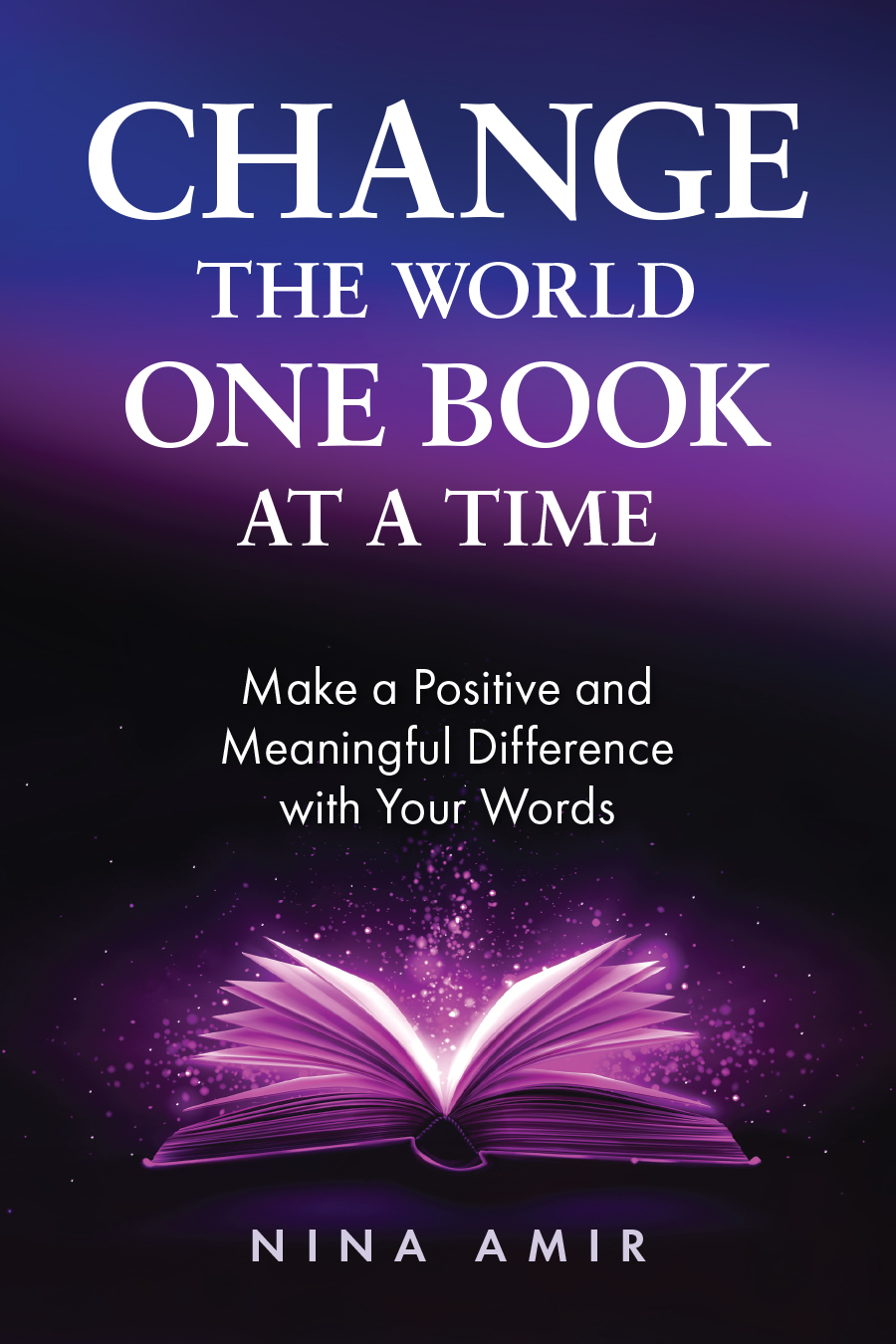
I wrote an entire chapter on how people change for my new book, Change the World One Book at a Time: Make a Positive and Meaningful Difference with Your Words. I have included two (slightly revised) excerpts from that chapter below. The information pertains to everyone and will help you understand change… so you can change.
If you are an activist, coach, therapist, clergy person, or someone with a cause, mission, or movement, consider writing a book that supports your efforts. Change the World One Book at a Time offers all the information you need to use a book to make a difference.
Excerpt 1: Five Foundational Change Principles
First, change is an active process, while transformation is a state of having thoroughly morphed into something else. The act of change—or taking action toward a desired change—causes and results in transformation.
Second, change is ongoing and happening now—whether you know it or not, and whether you like or dislike it. As Heraclitus said, “The only thing that is constant is change.”
Consider the fact that the political climate can change in a moment, the stock market can crash in a day, and the weather changes hour by hour. Also, the lining of your stomach renews itself every few days, and your epidermis rejuvenates every two to four weeks. Likewise, your emotions can change from happy to sad in an instant, and your energy can go up or down simply by encountering another human being or digesting your most recent meal.
Third, many of us resist change. According to a study conducted by Mount Eliza Business School, over 70 percent of change initiatives fail because of people’s resistance. Other studies reveal that 91 percent of patients who underwent heart bypass surgery resisted adjusting their lifestyle—although not doing so could shorten their life expectancy. Even when people have dreams and goals, if achieving them requires change, they too often do what’s easiest and safest—they stay the same.
Fourth, even though few people like to change, most accept—even embrace—the big life changes, like getting married, changing jobs, and adopting new technologies. That means people can and do change.
Fifth, you can’t force anyone to change, and angrily insisting on change is a broken strategy. If you attempt either of these things, your attitude and energy will be met with higher levels of resistance from your audience. And as Carl Jung contended, “What you resist not only persists but will grow in size.”
Excerpt 2: The Five Stages of Change
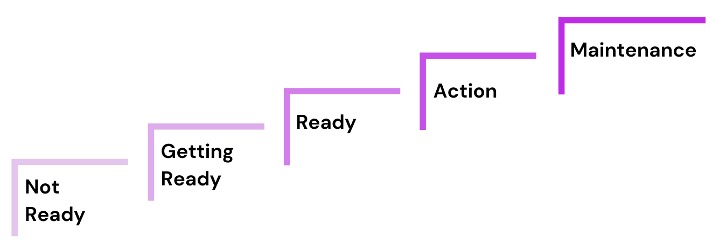
It’s common to get stuck at different stages of change. Understanding where you are now on the Stages of Change Model created by James O. Prochaska and Carlo DiClemente helps you move to the next stage. You can complete this exercise with [any goal] in mind.
If you are in or tend to linger in the Not Ready stage, you have no intention of changing in the next six months. You may be uninformed or underinformed about the consequences of your behavior, or you may have failed at change in the past; that lack of information or failure to change now colors your sense of being ready and able to change in the present. Some may see you as resistant, unmotivated, or unready for help.
When you enter (or remain stuck in) the Getting Ready stage, you seriously think about changing at some point in the next six months. You may be aware of the pros and cons related to change, but you feel ambivalent and continue to weigh the costs and benefits. People who get stuck in this stage often characterize themselves as “overthinkers” and stay in their heads rather than taking bold action.
If you are in the Ready stage, you plan to act in the next month. You may have an action plan and feel almost ready to take that step.
In the Action stage, you have taken observable—and possibly consistent, if not yet habitual—action toward transformation in the last six months.
Last, if you are in the Maintenance stage, you’ve made specific outward modifications in your lifestyle and are working to keep up your habits.
You are likely in different stages depending on the activities necessary to [achieve a goal]. Similarly, if you apply this framework to other life arenas, you will find yourself at different stages when it comes to health, work, finances, or relationships.
Be the Change You Want to See
The quotation commonly attributed to Mahatma Gandhi—“Be the change you want to see in the world.”—speaks to the importance of identity in the change process. Transformational coaches know that change begins with identity and not the other way around.
You may have been told that new habits lead to a new identity. While that’s true, that approach takes time…a lot of time. It’s better to reverse that change process.
Choose an identity first. Then, your habits align with that new way of being. You might still need to remind yourself that you are now someone with the new identity, and, therefore, has the habits. But the habit will form quickly.
For example, if you want to write a book in the new year but you didn’t write consistently (or at all) last year, choose to be a writer. Take on that identity.
Writers have the habit of writing consistently. When you find yourself wondering, “Should I write today?”, remind yourself you are a writer. Writers write. Your answer will be clear: “I should…and will write today, because I am a writer.”
The same is true if your New Year’s goal is to get in better shape. You might choose to be someone who works out five times per week. Your habit is then to do exactly that—and your answer to the question “Should I work out today?” will always be, “Yes.”
Before you know it, you will be in the habit of writing or working out. This is true no matter what habit you want. Choose to “be” someone with that habit, and you will develop the habit faster than you thought possible.
Where Are You in the Change Process?
If you have a goal for the new year, consider where you are in the process of change. Are you not ready, getting ready, ready, or taking action?
Let’s say you are not getting ready…at all. Decide to be someone who is getting ready or, better yet, ready. Then ask yourself: What does a person who is ready to achieve ___ goal do? What actions do they take or what habits do they have?
With that information, you can begin acting like such a person. Be that person…and take the same actions.
Then move forward by choosing to be someone in the action stage of change. What would such a person do? Be that person, and take those actions.
With an understanding of the principles and stages of change, you can create personal change more easily and quickly. That leads to different results in the new year. Change into a person who can achieve your New Year’s goals.
Where are you in the change process, and who do you need to be to achieve your new year’s goals? Tell me why in a comment below. And please share this post with those who may benefit from reading it.
Don’t forget to order a copy of Change the World One Book at a Time: Make a Positive and Meaningful Difference with Your Words for yourself or a coach, therapist, healer, writer, activist, clergy person, or anyone with a cause, mission, purpose, or movement to promote.
Image courtesy tassev.